RIVER FISH · Rivers, estuaries & coast
Striped bass
Morone saxatilis
A silvery bass with continuous dark horizontal stripes. Coastal populations connect freshwater rivers, estuaries and the ocean.
Explore related rivers & gauges ↓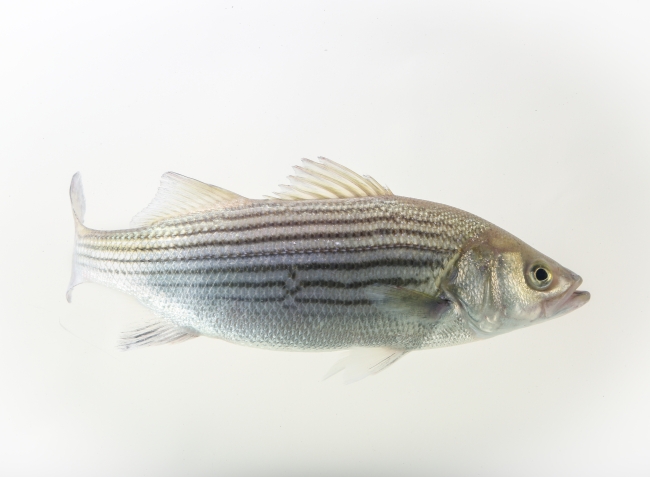
Meet the fish
- Habitat
- Coastal waters and estuaries, with freshwater spawning habitat; introduced populations also inhabit inland reservoirs.
- On the menu
- Adults eat smaller fish and invertebrates; larvae feed on zooplankton.
- Size context
- NOAA reports a maximum length of about 5 feet. That is an upper size, not a typical catch or a legal size limit.
- Range & local context
- Native coastal range includes eastern North America. Striped bass have also been introduced to the West Coast and inland waters.
Living with the river
Water & habitat
Freshwater flow is only part of an estuary's story. Tidal movement, salinity and location also matter; a river gauge cannot describe the entire coastal habitat.
Seasonal life
Mature coastal fish move into fresh or brackish water to spawn in spring. Young fish use estuarine nursery habitat.
Before you go
Coastal and inland fisheries have different management. Follow the rules for the exact waterbody rather than applying a single national fishing season.
Use the linked agencies and the relevant river guide for current regulations, closures and consumption advisories. A species profile is not a fishing license or a statement that harvest is allowed.
Editorial review: . Regional size examples are labeled; maximum lengths are not typical sizes.
More river fish
Keep exploring species connected to the same river-guide network.