RIVER FISH · Ocean-to-river salmon
Chinook salmon
Oncorhynchus tshawytscha
The largest Pacific salmon, born in freshwater before migrating to sea and later returning to rivers and tributaries to spawn.
Explore related rivers & gauges ↓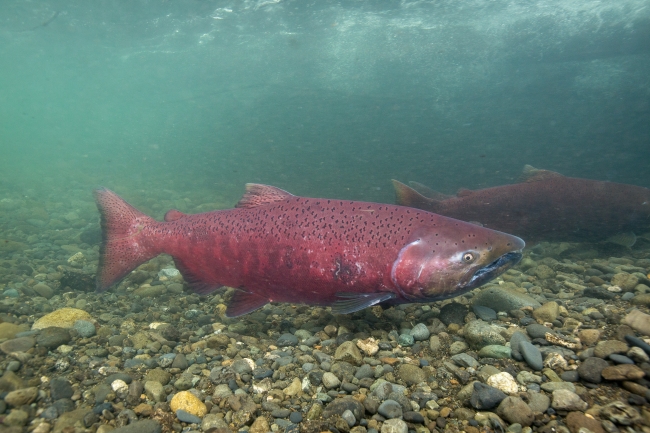
Meet the fish
- Habitat
- Freshwater streams, estuaries and wetlands early in life, followed by ocean habitat and a return to freshwater spawning reaches.
- On the menu
- Young fish eat insects and crustaceans; older Chinook feed mainly on other fish in marine waters.
- Size context
- NOAA describes mature fish as typically around 3 feet and 30 pounds, though exceptional Chinook grow much larger.
- Range & local context
- Native along the North American Pacific coast from California through Alaska, with introduced populations in some inland waters including the Great Lakes.
Living with the river
Water & habitat
Cold water, clean gravel, adequate flow and open migration routes are critical at different life stages. One gauge cannot represent the full migration corridor.
Seasonal life
Different populations return in spring, summer, fall or winter runs. Females dig gravel redds, and Pacific salmon die after spawning.
Before you go
Management is population-specific. Some Chinook populations are federally endangered or threatened while others support fisheries; always check current local rules.
Use the linked agencies and the relevant river guide for current regulations, closures and consumption advisories. A species profile is not a fishing license or a statement that harvest is allowed.
Editorial review: . Regional size examples are labeled; maximum lengths are not typical sizes.
More river fish
Keep exploring species connected to the same river-guide network.