RIVER FISH · Cold tributaries & Pacific coast
Coho salmon
Oncorhynchus kisutch
A Pacific salmon that spends its early life in cool freshwater tributaries, grows in the ocean and returns to natal streams to spawn.
Explore related rivers & gauges ↓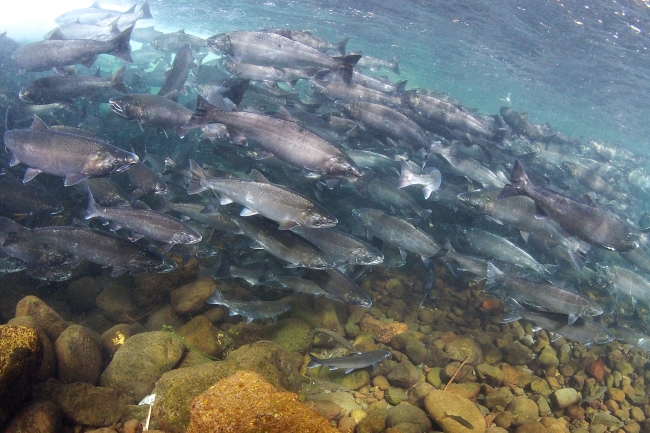
Meet the fish
- Habitat
- Cool smaller rivers and tributaries with stable gravel, followed by estuarine and marine habitat.
- On the menu
- Young fish eat insects; ocean-going fish shift to plankton, crustaceans and larger forage such as anchovies, herring and squid.
- Size context
- USFWS reports an average adult around 24 inches and roughly 7–11 pounds, with larger fish possible.
- Range & local context
- Native around the North Pacific from California north through Alaska and across to Asia; introduced populations occur in some inland waters.
Living with the river
Water & habitat
Cool flow, gravel quality and access between tributaries and the ocean all matter. Rain-driven flow pulses can cue migration but do not guarantee fish presence.
Seasonal life
Adults generally return in fall. Females dig gravel redds, eggs overwinter in the streambed and young fish spend an extended freshwater rearing period.
Before you go
Some coho populations are federally protected while others support fisheries. Regulations depend on the population and waterbody.
Use the linked agencies and the relevant river guide for current regulations, closures and consumption advisories. A species profile is not a fishing license or a statement that harvest is allowed.
Editorial review: . Regional size examples are labeled; maximum lengths are not typical sizes.
More river fish
Keep exploring species connected to the same river-guide network.