RIVER FISH · Cover & backwaters
Largemouth bass
Micropterus salmoides
A cover-oriented predator that hunts around vegetation and submerged structure in lakes, ponds and river backwaters.
Explore related rivers & gauges ↓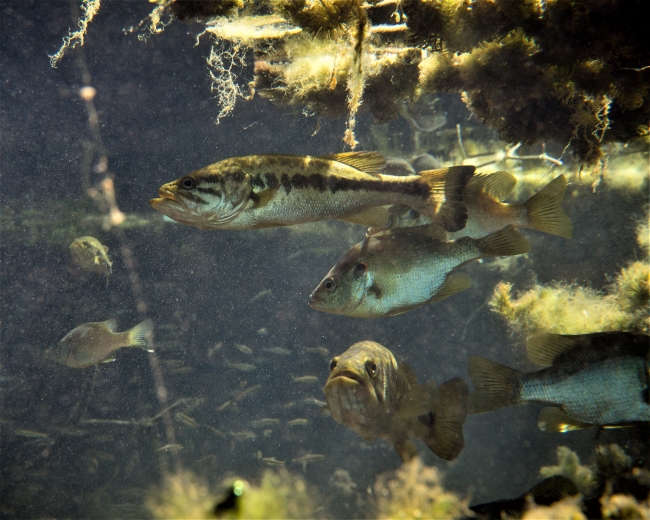
Meet the fish
- Habitat
- Vegetated lakes and ponds, swamps, creeks and quieter river backwaters.
- On the menu
- Adults eat fish, crayfish and frogs. Young fish eat smaller invertebrates and fish.
- Size context
- USFWS lists a common length of about 16 inches; growth varies by habitat and population.
- Range & local context
- The native range includes the Great Lakes, St. Lawrence and Mississippi basins and parts of the Atlantic drainage. Introductions have spread it much farther.
Living with the river
Water & habitat
The quiet backwater beside a river can be quite different from the main channel at a gauge. Vegetation, cover and oxygen availability add context that flow alone cannot provide.
Seasonal life
Spawning occurs in spring. Males clear a nest on firm bottom material and guard eggs and young.
Before you go
A listing on a river guide does not establish that largemouth bass are native at that location or that harvest is permitted.
Use the linked agencies and the relevant river guide for current regulations, closures and consumption advisories. A species profile is not a fishing license or a statement that harvest is allowed.
Editorial review: . Regional size examples are labeled; maximum lengths are not typical sizes.
More river fish
Keep exploring species connected to the same river-guide network.